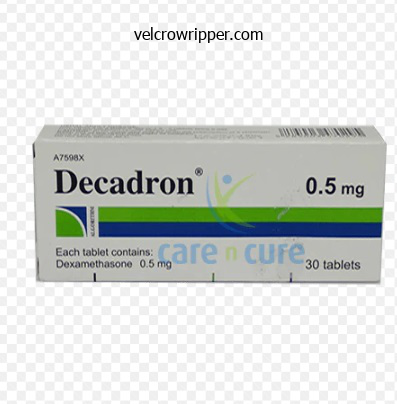
Decadron

Decadron
Decadron dosages: 8 mg, 4 mg, 1 mg, 0.5 mg
Decadron packs: 10 pills, 20 pills, 30 pills, 60 pills, 90 pills, 120 pills, 180 pills, 270 pills, 360 pills
Useful (but not totally reliable) indicators of natural disease (so-called red flags) include features of weight loss, bloody or melenic stools, steatorrheic stools, and a strong household history of carcinoma acne girl decadron 0.5 mg buy discount on line. Location of Pain Patients with continual belly pain might have atypical referral areas acne tool decadron 0.5 mg buy generic online. For instance, sigmoid pain may be referred to the left 744 Section Five Clinical States/Viscera higher quadrant or right decrease quadrant and gastric pain to the proper higher quadrant acne moisturizer buy 0.5 mg decadron with amex. In rare circumstances, sufferers report radiation of belly pain to the lower extremities, the again, or the complete side of their body. Pain from carcinoma of strong abdominal organs occurs late in the illness and is due to stretching of the organ capsule from tumor development or invasion of the capsule. Quality of Pain As in the evaluation of acute abdominal pain, the quality of persistent belly pain is mostly unhelpful. However, distention (and possibly contractions) of the distal esophagus can be experienced as a burning sensation. In distinction to the esophagus, where burning high quality appears to be the predominant qualitative descriptor of ache, a burning high quality of stomach ache could also be an indication of a neuropathic origin of the pain, particularly when fixed and unrelated to food intake or defecation. In contrast, the pain from superior malignancy of strong visceral organs is fixed and, in the absence of intervention, is invariably progressive, normally over a period of weeks to months. In what are currently known as major motility issues of the esophagus (syndromes that are usually manifested as retrosternal or epigastric ache and discomfort), psychological factors may play an important pathophysiological position as properly. For instance, patients with chest ache and both a hypertensive lower esophageal sphincter, nutcracker esophagus, or hypotensive contractions have the next incidence of somatization, depression, and nervousness than do management topics (Song et al 2001). Lifestyle Factors Lifestyle components can have a serious impact on the event of continual abdominal pain. Travel to endemic areas could predispose to continual infections similar to tuberculosis of the abdomen and giardiasis. In apply, which means all patients with belly ache and significant weight reduction must be assumed to have an organic trigger till proved in any other case. Steatorrhea is related to malabsorption from intestinal causes or chronic pancreatitis. Bloody stools suggest distal inflammatory colonic pathology corresponding to ulcerative colitis or advanced malignancy, and melena or hematemesis may point out the presence of a bleeding peptic ulcer. Visceral hypersensitivity is manifested as lowered perception thresholds for discomfort and ache, increased intensity and affective stimulus scores, and atypical viscerosomatic referral areas (the somatic space of the physique at which a person localizes a visceral stimulus). It seems to underlie the characteristic report of belly pain and may be answerable for the frequent symptom of non-painful discomfort within the form of bloating, fullness, or the feeling of gas. This hypersensitivity to gastric distention appears to be secondary to a primary sensory abnormality somewhat than decreased gastric compliance since the pressure� volume relationships obtained throughout gastric distention were comparable in sufferers with regular and abnormal pain thresholds (Mertz et al 1998; Van Oudenhove et al 2007, 2009). Vulnerability factors are thought to mediate their effects in utero till youth. Its prevalence seems to be similar in white folks and African Americans in the United States, but it may be less common in the Hispanic inhabitants. It must be saved in mind that almost all of these studies concerned patients seen in city specialty clinics and will not reflect prevalence charges in the basic population in these international locations. However, ache is most frequently referred to the left or right lower quadrants, and tenderness on examination is most common over the sigmoid colon. Using patient-based severity ratings, the vast majority of sufferers in population-based surveys falls into the delicate symptom class, and nearly all of persistent specialty clinic attendees reports their signs as being average to extreme. It is defined as belly pain or discomfort associated with adjustments in bowel habits; this definition requires the absence of detectable natural illness. The usefulness of symptom-based diagnosis is evidenced by research demonstrating 98% specificity of those standards when alarm options similar to weight reduction, refractory diarrhea, and a family history of colon most cancers have been absent (Vanner et al 1999). However, the shortage of distinction between stomach ache and discomfort in these symptom-based criteria puts into query their capacity to identify a homogeneous group of problems. For instance, continual stomach discomfort (in the form of urgency) relieved by bowel movement, however without associated ache, is a non-specific symptom that occurs with several sorts of natural colitis, such as collagenous and microscopic colitis. Onset associated with a change in the kind (appearance) of stools *Criterion fulfilled for the previous 3 months with symptom onset a minimum of 6 months before prognosis. In pathophysiology analysis and scientific trials, a pain/discomfort frequency of no much less than 2 days per week through the screening evaluation is beneficial for topic eligibility. Most typically, disappearance of the symptoms was as a outcome of changes within the signs versus complete decision of the symptoms (Halder et al 2007). In addition, an affiliation with melancholy, somatization, hypochondriasis, and phobias has been reported (Walker et al 1992). The prevalence of co-existing psychiatric problems varies with the target inhabitants studied and has been reported to range from 40% in populationbased surveys to larger than 90% in tertiary referral facilities (Tosic-Golubovic et al 2010). The high co-morbidity seen in such referral centers is likely to mirror an overestimate since sufferers with co-existing psychiatric disorders, particularly despair, tend to exhibit higher well being care�seeking behavior (Hillila et al 2007). Rather, completely different patterns of dysregulation in the complicated interactions between the central nervous system and the respective stomach end-organ (esophagus, abdomen, intestine) could also be concerned in numerous subsets of sufferers. Gene�environment interactions are likely to shape the vulnerability of people for the event of persistent stomach ache states by altering the specific components of those neurovisceral interactions (Saito et al 2008). Although dysregulations at the preliminary onset of signs (typically in childhood) could also be purely practical. The brain receives interoceptive enter from stomach viscera and responds to such input in a reflexive way by bearing in mind contextual elements (including psychosocial stress) and different needs of the organism (Mayer 2011). However, alterations within the modulation of interoceptive input and/or its notion by activity inside central stress and arousal circuits, in addition to cognitive and emotional enter to these circuits, can alter each the notion and the suggestions 750 Section Five Clinical States/Viscera symptoms and have demonstrable adjustments in colonic motility. In many of these fashions, peripheral sensitization is transient, and the response properties of main afferents return to their normal state after complete resolution of the pre-inflammatory state. However, persistent visceral hyperalgesia and increased responsiveness of visceral afferents outlasting the acute inflammatory event have been reported in some fashions (Vergnolle 2008). Such neuroplastic modifications may have an result on the response properties of major afferents, including the peripheral endings of spinal and vagal afferents (Moore et al 2002). Changes in afferent nerve terminals might have an effect on the responsiveness to visceral stimuli, alter the release of neuropeptides from these terminals, and end in neurogenic inflammation. Based on preclinical and scientific evidence, elevated epithelial permeability has been instructed as a possible mechanism facilitating the entry of intestine microbiota to the gut-associated immune system and for the larger prevalence of belly ache in some patients (Larauche et al 2009, Ohman and Simren 2010, Barbara et al 2011, Zhou and Verne 2011). These modifications in turn end in alterations in interoceptive suggestions to the brain. In abstract, one could speculate that there are totally different ways in which chronic belly ache syndromes can develop from dysregulations within the brain�gut axis. Longstanding transient dysregulation of homeostatic reflexes (in the periphery and/or centrally) could progressively lead to neuroplastic peripheral and/or central modifications and thereby result in everlasting dysregulation and chronic ache. Alternatively, the formation of maladaptive interoceptive recollections could create a central mechanism by which pain and discomfort may be skilled in the context of emotional misery or in the expectation of future events ("prediction error") without any abnormal peripheral responses. Exaggerated or extended colonic motility responses to meals consumption (gastrocolonic response) may be present in the subset of sufferers who report an exacerbation of abdominal ache with food consumption. For instance, small bowel overgrowth (Spiller and Garsed 2009) and alterations in colonic microflora (dysbiosis) have recently been implicated. In addition, in view of latest proof that the gut flora can affect mind growth in neonatal animals (Heijtz et al 2011), will probably be necessary to determine whether dysbiosis in infancy might completely prime the gut�brain axis for elevated responsiveness in maturity. It is intriguing to speculate that host�microbial interactions ("dysbiosis") in vulnerable people in the course of the early phase of the dysfunction (including infancy) might lead to completely altered immune or host cell responses, which then proceed to play a job in the persistence of symptoms, even in the absence of the infectious organism. Evidence for Primary Central Alterations Altered Modulation of Visceral Pain There are multiple mechanisms by which the central nervous system can modulate afferent alerts from the viscera, including elevated exercise of endogenous pain facilitation and reduced engagement of endogenous pain inhibitory techniques. Endogenous pain modulation systems are more doubtless to mediate the consequences of have an effect on, temper, expectation, and environmental context (for instance, stress) on pain perception (Mayer et al 2008, Chang 2011). Although these neuroimaging studies demonstrate evidence for a role of cognitive factors within the noticed hyper-responsiveness to pain associated with these tasks, future research are needed to find out whether or not these responses are based mostly on main central abnormality or whether this conditioned sample of responding develops in an try and adapt to the long-standing belly ache. Although enhanced perception of gastric stimuli may be a vital central mechanism within the improvement of signs, the role of gastric acid, acute and chronic gastric mucosal an infection, and gastroduodenal motility abnormalities in dyspeptic symptoms remains to be determined. It has been advised that impaired gastric accommodation could trigger speedy transit of food from the proximal part of the stomach and result in early antral distention, which in turn offers rise to dyspeptic signs. In the United Kingdom, the annual indirect and direct value of dyspepsia to society is estimated to be �2 billion and �1 billion, respectively (Moayyedi and Mason 2002). The irregular modulation of the gastric distention threshold by lipid in a distant website means that the pathophysiological course of may reside in the central nervous system. However, many research have indicated that the percentages ratio of the genetic mutation having an impact was solely about 2 to three (Cailleri et al 2006, Tahara et al 2008, Oshima et al 2010), and much like other complicated polygenic ache disorders, single nucleotide polymorphisms are unlikely to elucidate a big quantity of the variance in signs.
J�rum E, �rstavik K, Schmidt R, et al: Catecholamine-induced excitation of nociceptors in sympathetically maintained ache, Pain 127(3):296�301, Feb 2007 acne mechanica 8 mg decadron purchase mastercard. Kilo S, Schmelz M, Koltzenburg M, et al: Different patterns of hyperalgesia induced by experimental irritation in human skin, Brain 117:385�396, 1994 acne facial order 1 mg decadron amex. Kimura J: Electrodiagnosis in diseases of nerve and muscle, Oxford, 2001, Oxford University Press acne breakouts discount decadron 1 mg fast delivery. Koltzenburg M, Bendszus M: Imaging of peripheral nerve lesions, Current Opinion in Neurology 17:621�626, 2004. Lang E, Claus D, Neundorfer B, et al: Parameters of thick and skinny nervefiber features as predictors of pain in carpal tunnel syndrome, Pain 60:295�302, 1995. Lindblom U: Analysis of irregular touch, ache, and temperature sensation in patients. Fruhstorfer H, Lindblom U: Sensibility abnormalities in neuralgic patients studied by thermal and tactile pulse stimulation. In von Euler U, Franz�n O, Lindblom U, et al: Somatosensory mechanisms, London, 1984, Macmillan, pp 353�361. Gierthmuhlen J, Maier C, Baron R, et al: Sensory indicators in complicated regional pain syndrome and peripheral nerve injury, Pain 153:765�774, 2012. Grosskreutz J, Quasthoff S, Kuhn M, et al: Capsaicin blocks tetrodotoxinresistant sodium potentials and calcium potentials in unmyelinated C fibers of biopsied human sural nerve in vitro, Neuroscience Letters 208:49�52, 1996. Haanp�� M, Laippala P, Nurmikko T: Allodynia and pinprick hypesthesia in acute herpes zoster, and the development of postherpetic neuralgia, Journal of Pain and Symptom Management 20:50�58, 2000. Helgason S, Petursson G, Gudmundsson S, et al: Prevalence of postherpetic neuralgia after a primary episode of herpes zoster: prospective study with long term comply with up, British Medical Journal 321:794�796, 2000. Magri F, Buonocore M, Camera A, et al: Improvement of intra-epidermal nerve fiber density in hypothyroidism after l-thyroxine remedy. Meyer-Rosberg K, Kvarnstrom A, Kinnman E, et al: Peripheral neuropathic pain-a multidimensional burden for sufferers, European Journal of Pain 5:379�389, 2001. Mumenthaler M, Schliack H, St�hr M: L�sionen peripherer Nerven und radikul�re Syndrome, Stuttgart, 1998, Thieme. Nordin M, Nystr�m B, Wallin U, et al: Ectopic sensory discharges and paresthesiae in sufferers with issues of peripheral nerves, dorsal roots and dorsal columns, Pain 20:231�245, 1984. Ochoa J: Isoniazid neuropathy in man: quantitative electron microscope research, Brain ninety three:831�850, 1970. Ochs G, Schenk M, Struppler A: Painful dysaesthesias following peripheral nerve damage: a scientific and electrophysiological study, Brain Research 496:228�240, 1989. �rstavik K, Namer B, Schmidt R, et al: Abnormal perform of C-fibers in sufferers with diabetic neuropathy, Journal of Neuroscience 26:11287� 11294, 2006. �rstavik K, Weidner C, Schmidt R, et al: Pathological C-fibers in patients with a persistent painful situation, Brain 126:567�578, 2003. Clinical, electrophysiological and nerve biopsy findings in two circumstances, Journal of the Neurological Sciences 53:461�471, 1982. Polydefkis M, Hauer P, Sheth S, et al: the time course of epidermal nerve fiber regeneration: studies in regular controls and in individuals with diabetes, with and without neuropathy, Brain 127:1606�1615, 2004. Rosen L, Eltvik L, Arvesen A, et al: Local cold injuries sustained during military service within the Norwegian Army, Arctic Medical Research 50:159�165, 1991. Rotthier A, Baets J, Timmerman V, et al: Mechanisms of illness in hereditary sensory and autonomic neuropathies. Said G, Elgrably F, Lacroix C, et al: Painful proximal diabetic neuropathy: inflammatory nerve lesions and spontaneous favorable consequence, Annals of Neurology 41:762�770, 1997. Said G, Lacroix C, Lozeron P, et al: Inflammatory vasculopathy in multifocal diabetic neuropathy, Brain 126:376�385, 2003. Schiffmann R, Hauer P, Freeman B, et al: Enzyme alternative therapy and intraepidermal innervation density in Fabry illness, Muscle & Nerve 34:53�56, 2006. Schmelz M, Schmidt R, Ringkamp M, et al: Sensitization of insensitive branches of nociceptors in human pores and skin, Journal of Physiology 480:389� 394, 1994. ��eyler N, He L, Schonfeld D, et al: Small fibers in Fabry disease: baseline and follow-up data beneath enzyme alternative remedy, Journal of the Peripheral Nervous System sixteen:304�314, 2011. A key technique for functional analysis of small calibre afferent channels, Brain one hundred fifteen:893�913, 1992. An electrophysiological and histological study, Archives of Neurology 25:404�414, 1971. An electrophysiological and histological examine, Journal of the Neurological Sciences 10:457�469, 1970. Wartenberg R: Neuritis, sensory neuritis, neuralgia, New York, 1958, Oxford University Press. Wasner G, Schwarz K, Schattschneider J, et al: Interaction between histamineinduced itch and experimental muscle pain, European Journal of Pain eight:179�185, 2004. Serra J, Bostock H, Sol� R, Aleu J, et al: Microneurographic identification of spontaneous exercise in C-nociceptors in neuropathic ache states in people and rats, Pain 153(1):42�55, 2012. Serra J, Sola R, Quiles C, et al: C-nociceptors sensitized to chilly in a patient with small-fiber neuropathy and cold allodynia, Pain 147:46�53, 2009. Strachan H: On a form of a number of neuritis prevalent within the West Indies, Practitioner fifty nine:477�484, 1897. The Cuba Neuropathy Field Investigation Team: Epidemic optic neuropathy in Cuba-clinical characterization and risk elements, New England Journal of Medicine 333:1176�1182, 1995. Torebj�rk E: Clinical and neurophysiological observations regarding pathophysiological mechanisms in reflex sympathetic dystrophy. Torebj�rk E, Wahren L, Wallin G, et al: Noradrenaline-evoked pain in neuralgia, Pain 63:11�20, 1995. A exact prognosis is crucial as a end result of there are important therapeutic and prognostic implications. This form of the disease is typically as a end result of arterial compression of the trigeminal nerve as it exits the mind stem. Unfortunately, unwanted effects and diminishing efficacy are common issues with drugs and have led many patients to pursue surgical interventions. Based on this limited evidence, microvascular decompression by way of posterior fossa exploration provides probably the most complete and longest lasting pain reduction. Percutaneous or radiosurgical ablative procedures are less invasive, but pain recurrence and facial numbness are extra common. Such assets include the Cochrane Library, clinical evidence-based journals that summarize knowledge, online databases, and nationally and internationally produced guidelines. More just lately, electronic main care databases have been searched, and these have proven a better incidence rate and a youthful age group. Koopman and colleagues (2009) confirmed that the rate of misdiagnosis generally practitioners was as excessive as 48%. Multiple sclerosis, growing age, and probably hypertension are related danger factors. An evidence-based approach to the administration of those conditions is subsequently offered. The ignition speculation elegantly combines the known position of ion channels in neuropathic ache with previously described intraoperative and cadaveric anatomical observations (Devor et al 2002a). According to this speculation, harm to afferent trigeminal neurons renders them hyperexcitable, presumably through adjustments within the regulation and trafficking of channel proteins, and susceptible to synchronized afterdischarge activity. This task is made more difficult by the absence of a "gold normal" diagnostic examine with excessive sensitivity and specificity (Zakrzewska 2002a). Paroxysmal attacks of pain lasting from a fraction of a second to 2 minutes that affect one or more divisions of the trigeminal nerve and fulfill criteria B and C. The pain has a minimum of one of the following traits: � Intense, sharp, superficial, or stabbing � Precipitated at set off areas or by set off components C. Central myelin of oligodendroglial origin (dark) is clearly demarcated from peripheral myelin, which originates from Schwann cells. This pain, labeled as atypical, lingers for a substantial time after the primary sharp, severe pain or might even be present repeatedly. It is generally accepted that ache severity will increase with time, but no formal research have validated this assertion.
Syndromes
Two sufferers responded very nicely, one responded to placebo, and two had no response at all (Cohen et al 2007a) acne back decadron 4 mg safe. Given the restrictions on learning uncommon headaches, these knowledge certainly suggest that topiramate is price it using for this condition acne quizlet decadron 1 mg with mastercard. It is claimed to be underdiagnosed (Peres et al 2001, Wheeler et al 2001), however the absolute requirement for an indomethacin impact and no clear biological marker has been an issue acne wallet buy generic decadron 8 mg online. Patients with bilateral ache have been reported (Pasquier et al 1987, Iordanidis and Sjaastad 1989, Trucco et al 1992), as have sufferers with unilateral, side-alternating assaults (Newman et al 1992c, 2004; Marano et al 1994; Matharu et al 2006a; Baldacci et al 2008). It is claimed that nausea, photophobia, phonophobia, and cranial autonomic symptoms are infrequent in the course of the background ache however extra widespread with exacerbations (Bordini et al 1991, Newman et al 1994, Peres et al 2001). All three sufferers responded to treatment with indomethacin (Young and Silberstein 1993). Cervicogenic headache is attributable to disease or dysfunction of buildings within the neck. It is characterized by pain localized to the neck and occipital area, though it could radiate anteriorly; by precipitation or aggravation with neck actions or a sustained neck posture; and by local neck indicators such as limitation of movement or abnormal tenderness. Sjaastad and Spierings coined the term "hemicrania continua" in 1984 once they described two further cases (Sjaastad and Spierings 1984). The condition usually begins in maturity, though the age vary at onset is 5�67 years (mean, 28 years) (Peres et al 2001). Diagnosis of Hemicrania Continua Clinical Features the International Headache Society definition mandates that there be no facet shift; lists lacrimation, conjunctival injection, nasal signs, and ptosis/miosis as the only cranial autonomic symptoms; and mandates a response to indomethacin (Headache Classification Committee of the International Headache Society 2004). A unilateral, steady indomethacin-sensitive headache was first described by Medina and Diamond (1981), and the time period "hemicrania continua" was coined a few years later (Sjaastad and Spierings 1984). The reported efficient dose of indomethacin ranges from 25�300 mg every day (Newman et al 1994, Peres et al 2001). Concurrent remedy with gastric mucosa�protective agents ought to be thought of for patients requiring long-term remedy. Other medicine reported to be partially or utterly efficient, often in isolated instances, embrace ibuprofen (Kumar and Bordiuk 1991, Newman et al 1994), piroxicam -cyclodextrin (Sjaastad and Antonaci 1995), naproxen (Bordini et al 1991), aspirin (Espada et al 1999), the Cox-2 inhibitor rofecoxib (Peres and Zukerman 2000), and paracetamol with caffeine (Bordini et al 1991); corticosteroids may be transiently effective. Ambrosini A, Vandenheede M, Rossi P, et al: Suboccipital injection with a combination of rapid- and long-acting steroids in cluster headache: a doubleblind placebo-controlled research, Pain 118:92�96, 2005. Anthony M: Arrest of assaults of cluster headache by native steroid injection of the occipital nerve. Anttila V, Stefansson H, Kallela M, et al: Genome-wide association research of migraine implicates a typical susceptibility variant on 8q22. Appelbaum J, Noronha A: Pericarotid cluster headache, Journal of Neurology 236:430�431, 1989. Ashina M, Bendsten L, Jensen R, et al: Plasma ranges of calcitonin gene� associated peptide in chronic tension-type headache, Neurology fifty five: 1335�1340, 2000. Bahra A, Walsh M, Menon S, et al: Does persistent day by day headache come up de novo in association with regular analgesic use Oral Surgery, Oral Medicine, Oral Pathology, Oral Radiology, and Endodontics 85:158�161, 1998. Brzezinski A: Melatonin in humans, New England Journal of Medicine 336:186�195, 1997. Bussone G, Boiardi A, Merati B, et al: Chronic cluster headache: response to lithium remedy, Journal of Neurology 221:181�185, 1979. Bussone G, Leone M, Peccarisi C, et al: Double blind comparison of lithium and verapamil in cluster headache prophylaxis, Headache 30:411�417, 1990. Camarda C, Camarda R, Monastero R: Chronic paroxysmal hemicrania and hemicrania continua responding to topiramate: two case reviews, Clinical Neurology and Neurosurgery one hundred ten:88�91, 2008. Cid C, Berciano J, Pascual J: Retro-ocular headache with autonomic features resembling "continuous" cluster headache in a lateral medullary infarction, Journal of Neurology, Neurosurgery, and Psychiatry 69:134�141, 2000. Cittadini E, May A, Straube A, et al: Effectiveness of intranasal zolmitriptan in acute cluster headache. A randomized, placebo-controlled, double-blind crossover examine, Archives of Neurology sixty three:1537�1542, 2006. Costa A, Pucci E, Antonaci F, et al: the effect of intranasal cocaine and lidocaine on nitroglycerin-induced attacks in cluster headache, Cephalalgia 20:85�91, 2000. Effectiveness and relationship of antimigraine and antidepressant medicine, Neurology 26:121�127, 1976. Dalsgaard-Neilsen T: Uber die prophylaktische Behandlung der Migraine mit Deseril, Praxis forty nine:867�868, 1960. Damasio H, Lyon L: Lithium carbonate within the therapy of cluster headache, Journal of Neurology 224:1�8, 1980. Gallai V, Sarchielli P, Floridi A, et al: Vasoactive peptides ranges within the plasma of younger migraine sufferers with and without aura assessed each interictally and ictally, Cephalalgia 15:384�390, 1995. Gobel H, Lindner A, Heinze A, et al: Acute remedy for cluster headache with sumatriptan: findings of a one yr long-term research, Neurology fifty one: 908�911, 1998. Delreux V, Kevers L, Callewaert A: Hemicranie paroxystique inaugurant un syndrome de Pancoast, Revue Neurologique 145:151�152, 1989. Denuelle M, Fabre N, Payoux P, et al: Brainstem and hypothalamic activation in spontaneous migraine assaults, Cephalalgia 24:775�814, 2004. Denuelle M, Fabre N, Payoux P, et al: Hypothalamic activation in spontaneous migraine assaults, Headache 47:1418�1426, 2007. Ekbom K: Litium rid kroniska symptom av cluster headache, Opuscula Medica 19:148�156, 1974. Ekbom K: Lithium in the therapy of chronic cluster headache, Headache 17:39�40, 1977. Ekbom K: Lithium for cluster headache: evaluate of the literature and preliminary outcomes of long-term treatment, Headache 21:132�139, 1981. Ekbom K, Krabbe A, Micelli G, et al: Cluster headache assaults treated for up to three months with subcutaneous sumatriptan (6 mg), Cephalalgia 15:230�236, 1995. Ekbom K, Monstad I, Prusinski A, et al: Subcutaneous sumatriptan in the acute treatment of cluster headache: a dose comparison research, Acta Neurologica Scandinavica 88:63�69, 1993. Treatment of acute cluster headache with sumatriptan, New England Journal of Medicine 325:322�326, 1991. Espada F, Escalza I, Morales-Asin F, et al: Hemicrania continua: nine new cases, Cephalalgia 19:442, 1999. Evers S, Soros P, Brilla R, et al: Cluster headache after orbital exenteration, Cephalalgia 17:680�682, 1997. Feindel W, Penfield W, McNaughton F: the tentorial nerves and localization of intracranial pain in man, Neurology 10:555�563, 1960. Fogan L: Treatment of cluster headache: a double blind comparability of oxygen vs air inhalation, Archives of Neurology forty two:362�363, 1985. Formisano R, Angelini A, De Vuono G, et al: Cluster-like headache and head harm: case report, Italian Journal of Neurological Sciences eleven:303�305, 1990. A report of three sufferers with intracranial pathologic findings, Cephalalgia eight:79�82, 1988. Hannerz J: A case of parasellar meningioma mimicking cluster headache, Cephalalgia 9:265�269, 1989. Hannerz J, Linderoth B: Neurosurgical treatment of short-lasting, unilateral, neuralgiform hemicrania with conjunctival injection and tearing, British Journal of Neurosurgery 16:55�58, 2002. Headache Classification Committee of the International Headache Society: the International Classification of Headache Disorders (second edition), Cephalalgia 24:1�160, 2004. Heidegger S, Mattfeldt T, Rieber A, et al: Orbito-sphenoidal aspergillus an infection mimicking cluster headache: a case report, Cephalalgia 17:676�679, 1997. Heyck H: Serotoninantagonisten in der Behandlung der Migraine und der erythroprosopalgic Bings oder des Horton-syndroms, Schweizer Medizinische Wochenschrift 90:203�209, 1960. Igarashi H, Sakai F: Natural historical past of cluster headache, Cephalalgia 16: 390�391, 1996. Iordanidis T, Sjaastad O: Hemicrania continua: a case report, Cephalalgia 9:301�303, 1989. Irimia P, Cittadini E, Paemeleire K, et al: Unilateral photophobia or phonophobia in migraine in contrast with trigeminal autonomic cephalalgias, Cephalalgia 28:626�630, 2008. Jensen R, Brinck T, Olesen J: Sodium valproate has a prophylactic effect in migraine with out aura: a triple blind, placebo-controlled crossover examine, Neurology 44:647�651, 1994. Joubert J, Powell D, Djikowski J: Chronic paroxysmal hemicrania in a South African black. Kallanranta T, Hakkarainen H, Hokkanen E, et al: Clonidine in migraine prophylaxis, Headache 17:169�172, 1977. Klapper J: Divalproex Sodium in Migraine Prophylaxis Study Group: Divalproex sodium in migraine prophylaxis: a dose-controlled examine, Cephalalgia 17:103�108, 1997.
As neuroblasts migrate toward the olfactory bulb, they coalesce to kind a network of chains shifting rostrally acne natural remedies decadron 8 mg buy discount on-line. Newly born neurons in the grownup contend with markedly completely different circumstances than do those of the embryonic brain acne canada scarf decadron 1 mg discount line. Adult neuroblasts migrate via extra intricate terrain, incessantly over longer distances acne on neck decadron 4 mg purchase line. Coronal sections (upper panels) indicate the locations of the sagittal sections in A to C. Because D cells are much less mitotic than transit-amplifying cells, the increase in manufacturing of these intermediates might be restricted. The D cells then generate the excitatory granule neurons that migrate to the granule cell layer of the hippocampus. The rate at which the hippocampus produces new neurons varies significantly, relying on age, internal components similar to neurotransmitter levels, and exterior components corresponding to train, stress, and sleep. RegulationofNeurogenesis Several factors have been proven to control the start and integration of latest neurons in rodents, including environmental cues, learning-related stimuli, and neuronal exercise. One of the key features of the dentate gyrus is the formation of distinct representations of contexts, places, and episodes,42 a role that may render the region delicate to the setting or cortical exercise (or to both). The dentate gyrus, as part of the limbic system, also modulates emotional processes such as stress and melancholy. On nearer inspection, it turns out that astrocytes are in some ways ideally suited to fulfill the role of major progenitor. These structural options poise astrocytes to combine signals from a variety of sources to effectively regulate the stem cell niche. The true parent or stem cell of the widespread glial progenitor remains to be established and is a crucial avenue of research with considerable scientific potential. This is probably attributable to the fact that until lately, most scientists thought that astrocyte differentiation occurred "by default. However, given the big selection of capabilities attributed to astrocytes and the heterogeneity with which they carry out these duties, it now seems simplistic to think that every one astrocytes are created equal. The important elements of the neurogenic microenvironment are both molecular (cytokines, progress factors, other)112 and mobile, including endothelial cells113,114 and astrocytes. Interestingly, as a result of these components seem to inhibit terminal differentiation and myelin production,88,145-149 their effects should be counteracted for myelination to occur. Like the markers already discussed, A2B5 is expressed by oligodendrocytes early of their differentiation and is then downregulated because the cell matures. Selfrenewal is a vital characteristic of every, and the signaling pathways regulating this process have been implicated in cancers from a selection of organs. Other basic similarities between stem cells and most cancers cells in addition to proliferation embrace the ability to generate new (although not essentially normal) tissues, as properly as the flexibility of both cells to offer rise to phenotypically various progeny, as manifested by the heterogeneity of cells composing these tissues. One demonstrates this by isolating a cell or cells from a tumor and engrafting them into a new host, the place they proliferate and form a new lesion. Researchers additionally hypothesize that most cancers stem cells are required for progress and metastasis of the tumor and that elimination of this population is necessary for remedy. These genetically normal progenitors, although not tumorigenic per se, once recruited will then proliferate and contribute significantly to growth of the tumor and thus enhance whatever mass effect the neoplasm could have. Several research have shown that stem cells are capable of transformation, infiltration, and in the end, generation of malignant growths. Even nontumorigenic stem cells transiently display glioma traits such as aneuploidy, lack of inhibition by development and contact, insensitivity to development elements, and alterations in cell cycle. Putative therapies embody remedies that modulate the behavior of endogenous stem cell conduct, in addition to transplantation of exogenous cells. There are many steps in neurogenesis that may be focused, including survival, proliferation, migration, and differentiation. An necessary consideration when modulating endogenous regenerative responses is the age of the subject. Axons are myelinated and forming practical synapses with the correct goal cell. Choosing one or the other will rely upon the harm or illness and the objective of the remedy. Other potential parameters to be tailor-made to the patient embrace timing, route of administration, and immunosuppression. Strategies to do so reap the advantages of the inherent tropism of stem cells to injured or diseased regions of the mind. These cells have been utilized in animal fashions to focus on and scale back volumes of breast cancer and melanoma mind metastases. These photons may be collected and analyzed to assemble details about cell survival, tumorigenicity, and immunogenicity. Targeting of melanoma brain metastases using engineered neural stem/progenitor cells. Identity crisis for adult periventricular neural stem cells: subventricular zone astrocytes, ependymal cells or both Human neuroblasts migrate to the olfactory bulb through a lateral ventricular extension. Proliferation and differentiation of progenitor cells throughout the intact adult rat spinal twine. Age-related myelin dynamics revealed by increased oligodendrogenesis and brief internodes. Artificial niches for human grownup neural stem cells: risk for autologous transplantation therapy. Identification and isolation of multipotential neural progenitor cells from the subcortical white matter of the grownup human brain. Endogenous neural progenitor cells as therapeutic target after spinal wire harm. Maturation and death of adult-born olfactory bulb granule neurons: role of olfaction. Cellular transplantation strategies for spinal cord injury and translational neurobiology. Generation of neurons and astrocytes from isolated cells of the adult mammalian nervous system. Endothelial cells stimulate self-renewal and expand neurogenesis of neural stem cells. From stem cells to grandmother cells: how neurogenesis pertains to studying and memory. Trapp n Karl Herrup the nervous system is structurally and functionally probably the most sophisticated organ of the human body. Normal brain perform depends on the anatomic, biochemical, and physiologic integration of multiple cell sorts. All sensory, motor, and cognitive actions use circuitries consisting of multiple neurons with advanced connections. Neuronal growth and function, however, require applicable interactions with and assist from glial cells. The astrocyte serves many functions, together with structural help, upkeep of the blood-brain barrier, and regulation of neurotransmitters, ions, and power metabolism. Cells that give rise to oligodendrocytes during improvement are another major glial cell inhabitants within the adult mind that we all know little about. Transient, native shifts in membrane potential brought on by metal and halide ion fluxes throughout the membrane enable a neuron to switch a packet of data over micrometers or meters in a fraction of a second. This problem arises as a end result of greater than some other cell type in the body, there is a gigantic variety of structural and useful characteristics possessed by the varied cells that go by this name. Consider as three examples the Purkinje cell, the retinal photoreceptor cell, and the dorsal root ganglion neuron. All three are considered neurons, but the commonalities among them are troublesome to pin down. The cell physique is clear, but the axon is unconventional in its thickness and appearance. These examples and many others suggest that the definition of a neuron has little to do with morphology.
Second-stage labor pain includes pain transmitted by afferents as in the first stage of labor but in addition with additional somatic afferents innervating the vaginal surface of the cervix, vagina, and perineum acne guidelines decadron 0.5 mg discount with visa. These afferents travel via the pudendal nerves to dorsal root ganglia located at the S2�4 ranges and terminate within the superficial laminae of the dorsal horn with restricted rostrocaudal extension skin care for winter buy decadron 0.5 mg low price. Of observe, studies in animal and non-pregnant ladies have demonstrated an antinociceptive or minor analgesic impact of stimulation of the vaginal surface of the cervix skin care 3m decadron 0.5 mg best. Its function in reduction of secondstage labor pain is unclear but suggests possible activation of endogenous analgesia throughout labor within the presence of noxious stimuli. In the late first stage and in the course of the second stage of labor, aching, burning, and cramping discomfort could develop in the thighs, legs, and back in some parturients. This might be because of painful stimulation from stretching and tension in the pelvic cavity, bladder, urethra, and rectum and from strain on roots of the lumbosacral plexus, as within the case of an abnormal occiput posterior place of the fetus. Uterine contractions could result in myometrial ischemia, which causes the discharge of potassium, bradykinin, histamine, and serotonin. In addition, stretching and distention of the lower segments of the uterus and the cervix stimulate mechanoreceptors. These noxious impulses comply with the sensory nerve fibers accompanying sympathetic nerve endings, travel via the paracervical region and the pelvic and hypogastric plexus, and enter the lumbar sympathetic chain. Through the white rami communicantes of the T10, T11, T12, and L1 spinal nerves, they enter the dorsal horn of the spinal twine. These pathways could probably be mapped efficiently by demonstration that blockade at totally different levels alongside this path (sacral nerve root blocks of S2�4, pudendal block, paracervical block, low caudal or true saddle block, lumbar sympathetic block, segmental epidural blocks of T10�L1, and paravertebral blocks T10�L1) can alleviate the visceral element of labor ache. Uterine body afferents (A) partially regress during being pregnant and may contribute to the ache of the primary stage of labor. However, the most important enter is from afferents in the decrease uterine section and endocervix (B). By distinction, at least in animals, activation of afferents that innervate the vaginal surface of the cervix (C) results in analgesia, not pain, and so they enter the spinal cord in sacral areas quite than on the website of referred ache in labor. The visceral ache in first-stage labor can be relieved with a bilateral paracervical plexus or lumbar sympathetic block and second-stage somatic pain with a bilateral pudendal nerve block, whereas an epidural or intrathecal block and their variations can present analgesia during each levels of labor with applicable extension of the block. These sensitizing substances can amplify the notion and severity of pain (Pan and Eisenach 2010). Peripheral sensitization throughout labor may be answerable for the increase in labor pain associated with labor development, as nicely as present potential new targets specific for the relief of labor pain. Mu opioids Kappa opioids Spinal wire Periphery receptor agonists through the first stage of labor. Supraspinal, spinal, and peripheral results of opioid Role of Inhibitory Receptors Endogenous inhibitory receptors modulating ache responses are expressed within the peripheral afferent terminals, spinal wire, and supraspinal central nervous system to provide analgesia. Opioid receptor agonists, in particular, mu () and kappa () receptors, have been extra generally studied and used for analgesia. With somatic stimulation, tonic estrogen publicity reduces the supraspinal however not the spinal (intrathecal) analgesic impact of -opioid receptor agonists (Cicero et al 2002). Release of neurotransmitters at sensory afferent terminals is managed by presynaptic receptors that mainly management the flux of intracellular calcium as action potentials arrive. Animal research present that inhibition of calcium channels with gabapentin or associated compounds supplies antinociception in response to visceral stimulation by preventing the multistep process resulting in the release of neurotransmitters (Feng et al 2003). Sensitization and amplification of nociception can occur at the spinal twine stage following repetitive nociceptor activation. In 1933, Cleland had already reported pores and skin hypersensitivity on dermatomes T11�12 in laboring women. This hypersensitivity, which is ablated by a paravertebral native anesthetic injection, is most likely because of enhanced sensitization of spinal twine neurons receiving ongoing nociceptive visceral input from the cervix and enter from skin at these dermatomes. These increases together with the reduced carbon dioxide pressure associated with hyperventilation throughout labor end in a web reduction in uteroplacental perfusion in animal fashions (Bonica 1973, Shnider et al 1979). The -adrenergic effects of epinephrine on the myometrium might lead to dysfunctional labor, which can then turn into normal when labor analgesia is achieved. Better understanding of how these released stimulatory and inhibitory substances affect the labor process and labor pain may provide alternatives for higher administration of labor and labor ache. Cardiac output during the varied phases of labor between contractions and through contractions. In a group of patients in labor with out analgesia, the progressive improve between contractions and the additional improve during each contraction had been much larger than the modifications in the group of patients who received steady epidural analgesia. Ueland and Hansen (1969) showed that maternal cardiac output increased all through pregnancy when measured in the lateral place. The increase in cardiac output during being pregnant was due to an elevated stroke quantity and coronary heart price with the accompanying enhance in blood quantity. With the onset of labor, cardiac output additional elevated above the prelabor stage by 15, 30, 45, and 65� 80% in the course of the early first stage, late first stage, second stage, and immediate after delivery, respectively (Hendricks and Quilligan 1956, Ueland and Hansen 1969). Return of the 250�300 mL of blood extruded from the uterus throughout contraction to the maternal venous circulation accounts for about half the rise in labor-associated maternal cardiac output, whereas the opposite half is as a outcome of of sympathetic stimulation. Furthermore, maternal systolic and diastolic blood stress can improve by 20�30 mm Hg with uterine contraction throughout labor with out analgesia. The labor pain�associated adjustments in maternal hemodynamics and catecholamine concentrations, which can be deleterious to parturients with cardiovascular co-morbid situations or uteroplacental insufficiency, can be lessened by half with full analgesia, corresponding to epidural or intrathecal analgesia (Shnider et al 1983, Walls and Melzack 1999). Labor pain is a powerful respiratory stimulus that ends in an additional increase in tidal volume, minute air flow, and alveolar air flow above the already increased values during being pregnant. During labor, maternal Paco2 can be decreased from 32 to as low as 16�20 mm Hg, which together with the elevated plasma catecholamine concentrations could lead to decreases in cerebral and uterine blood circulate. The persistent repetitive nature of labor ache additionally leads to intervals of hyperventilation during uterine contractions, followed by compensatory durations of hypoventilation between contractions, which in turn may result in transient episodes of maternal and even fetal hypoxemia. Relief of labor pain, similar to with neuraxial analgesia, reduces the will increase in minute ventilation, oxygen consumption, catecholamine release, and lipolytic metabolism during the first stage of labor to ranges comparable to pre-labor values. However, the expulsive effort of second-stage labor can lead to an extra enhance in ventilation and metabolism even with neuraxial analgesia (H�gerdal 1983). Labor pain, nervousness, and emotional stress improve gastrin launch and inhibit the segmental and suprasegmental reflex of 778 Section Five Clinical States/Viscera A Lung volume compartments Cont. A, Serial measurements of lung volume compartments, pulmonary mixing index, and maximum respiration capacity throughout regular pregnancy. B, Pulmonary volumes and capacities in milliliters within the non-pregnant state and within the time period gravida. These modifications are further aggravated by recumbent positions, opioids, and depressant medicines. Consequently, laboring parturients are in danger for pulmonary aspiration, particularly during emergency induction of basic anesthesia. Despite the justifiable popularity and enthusiasm of neuraxial labor analgesia (now reaching 50�90% in developed countries), the majority of parturients around the world, especially in creating countries, may not have entry to or the sources for neuraxial labor analgesia. Furthermore, some parturients favor and treasure the experience of feeling the movement, rotations, and supply of their baby by way of the birth canal. Consequently, robust conclusive proof of their efficacy in relieving labor pain is generally not out there. Childbirth training could assist the parturient understand, prepare for, and cope with the labor process and may embrace participation of the help person. The psychoprophylactic technique was initially (in the 1950s) popularized in Russia and then modified by Lamaze (1956), who efficiently introduced it into the United States about the same time as regional anesthesia was reintroduced. The approach incorporates varied controlled muscle relaxation and breathing workouts, that are claimed to have a salutary impact on the pain expertise. This technique calls for close communication and coordination among the many trainer, the patient, help persons, and the health care staff to foster confidence within the parturient for pleasant fulfillment of the childbirth expertise. The presence of a associate or good friend can typically provide emotional help to the parturient. However, outcomes from North American research of continuous labor support are less optimistic than these from Europe or Asia (Simkin and Bolding 2004). In general, parturients tend to have the flexibility to use coping skills from psychoprophylactic techniques during early labor, but as labor progresses, success turns into progressively lower, with lower than a 3rd of parturients with the ability to use the technique by the onset of second-stage labor. Furthermore, Melzack (1981) showed that more than 90% of nulliparas and 75% of multiparas who had prepared childbirth coaching still rated their labor ache as average to severe. Acupuncture, or stimulation at meridians, when applied to parturients based on the different phases of labor in several randomized controlled trials resulted in decrease ache scores and fewer use of neuraxial or systemic analgesia than in women receiving placebo (Hantoushzadeh et al 2007, Borup et al 2009). Although acupuncture might hold some promise for labor analgesia, the need for trained personnel to perform the time-consuming procedure alone might limit its widespread use or makes an attempt at intrapartum analgesia.
The proportion of patients with 30 and 50% or greater decreases in imply pain scores was higher in the pregabalin than in the placebo group (63 versus 25% and 50 versus 20%, P = zero skin care yang terbaik cheap decadron 0.5 mg fast delivery. This 12-week, multicenter study involving either flexible-dose pregabalin, a hundred and fifty to 600 mg/day (n = 70), or placebo (n = 67) constitutes one of many largest medical studies on pain with spinal twine damage and clearly confirmed that in patients allowed to maintain taking their present secure pain medication, pregabalin was associated with a discount in ache whatever the major pain treatment was acne 5 days before period 0.5 mg decadron sale. The physique of literature on both gabapentin and pregabalin suggests that they possess comparable efficacy and tolerability skin care 6 months before wedding decadron 1 mg purchase visa. Some superiority of pregabalin, which is supposed to exert its pharmacological results through the same mode of motion as gabapentin, is attributed to its linear pharmacokinetics, twice-a-day dosing, and shorter titration phase to attain an efficacious dose. The only information obtainable come from some occasional reviews from small and less-controlled studies. A recent publication on substitution of gabapentin therapy with pregabalin in an open-label assessment instructed that pregabalin may provide further ache aid and enhance in quality of life, no much less than in a bunch of patients with peripheral neuropathy (Toth 2010). In a latest evaluation by Finnerup and colleagues (2010) by which the 12 published pregabalin trials as a lot as that time have been summarized, the response price to pregabalin was calculated to be 39%, whereas 20% responded to placebo. However, the authors admitted that inclusion of nonetheless unpublished trials would change this relationship to 42% for pregabalin and 31% for placebo (Finnerup et al 2010). The commonest antagonistic results of carbamazepine are extreme sedation and ataxia. Cognitive impairment, sedation, orthostatic hypotension, and sexual dysfunction are additionally frequent and poorly tolerated. Amitriptyline, essentially the most studied drug of this class, has been discovered to be one of many medicines that must be avoided in the elderly. The diagnosis was confirmed by a score of no less than 3 on the Michigan Neuropathy Screening Instrument. The primary efficacy measure was the weekly imply rating of the 24-hour common pain score, which was rated on an 11-point (0�10) Likert scale (no ache to worst possible pain) and computed from diary scores between two visits. Similar to all other such trials, pain was measured with an 11-point scale, and duloxetine therapy resulted in a 1- to 1. Both doses of duloxetine, 60 and one hundred twenty mg/day, afforded the same degree of ache aid. Response was achieved in the first 2 weeks with each duloxetine and placebo, with additional however minor enchancment occurring over time for both. Duloxetine slightly elevated fasting serum glucose ranges, though this effect was deemed to be of minimal clinical significance. However, the authors famous that the proof in favor of duloxetine is far more solid (Sultan et al 2008). Pain reduction and reduction of depression are impartial results (Max et al 1987, Sindrup et al 1992). In contrast to the opposite widely used anticonvulsant and antidepressant medicine, the opioids have an incomparable flaw. Uncontrolled and principally retrospective stories in the past instructed that opioids had been efficient as long-term therapy with low risk for dependancy (Taub 1982, France et al 1984, Portenoy and Foley 1986). This view has changed to a extra cautious one in current years, with carefully monitored prescribing of opioids being required. With prescription of opioids, the benefit�risk ratio between ache reduction and unwanted effects needs to be more rigorously balanced, in addition to everlasting monitoring for abuse and habit, significantly in sufferers with psychological health issues (T�lle et al 2007). However, prescribing opioids on a long-term foundation is associated with a range of medical problems, in addition to societal issues. Medical issues embrace traditional opioidrelated adverse results, corresponding to sedation and psychological clouding, in addition to one of the persistent problems, persistent constipation, for which a number of medication are particularly being developed. A number of other medical points have captured the attention of clinicians, together with sex hormone dysregulation and disordered sleep. A societal concern has been the dramatic rise in prescription opioid abuse, which has prompted a selection of modifications in the greatest way that opioids are prescribed, corresponding to the necessity for an opioid treatment agreement and urine drug screen as part of the usual of apply. However, controlled-release morphine titrated to a maximum dosage of 300 mg every day was superior to placebo in sufferers with phantom limb ache (Huse et al 2001). A more recent study on postamputation ache compared opioids and sodium channel blockers. Treatment with morphine, however not mexiletine, resulted in a decrease within the intensity of postamputation ache but was associated with the next price of unwanted side effects and no improvement in self-reported ranges of total practical activity and painrelated interference in every day activities (Wu et al 2008). Pharmacological antagonism research have demonstrated that each mechanisms of action contribute to the analgesic results of tapentadol. Both isobolographic analysis of occupation�effect information and a theoretically equivalent methodology to determine interactions from the impact scale demonstrated a very pronounced synergistic interplay between the two mechanisms of motion of tapentadol (Schr�der et al 2011). Tramadol is an atypical analgesic that weakly inhibits norepinephrine and serotonin reuptake, but the main metabolite reveals low-affinity binding to -opioid receptors. It stays unsettled how a lot -opioid receptor binding contributes to total ache discount since tramadol analgesia is simply partially reversible by naloxone (Raffa et al 1992). In one other examine, pain after amputation was investigated in ninety four treatment-na�ve post-traumatic limb amputees with phantom pain. The sufferers had an average of 4 on a visual analog scale and were randomly assigned to obtain individually titrated doses of tramadol, placebo (doubleblind comparison), or amitriptyline (open comparison) for 1 month. In treatment-na�ve sufferers, each amitriptyline and tramadol offered wonderful and secure control of phantom 1009 limb and stump ache with no major antagonistic occasions (WilderSmith et al 2005). Sedation and cognitive impairment are quite variable however normally improve over time. Although ache discount with morphine was superior to that with placebo and practically superior to nortriptyline, patients were more likely to drop out in the course of the opioid remedy phase. Education of clinicians, in addition to regulatory companies, concerning the appropriate use of opioids has contributed to improved prescribing habits over the previous decade (Joranson et al 2000, 2002). Topical capsaicin has been studied intensively, however the results have been variable (Watson et al 1993, Watson 1994), and only high-concentration capsaicin proved to be efficacious, which led to its approval (Backonja et al 2008, Clifford et al 2012). For each preparations, blood levels are well beneath the minimal for systemic toxicity (Campbell et al 2002). Topical High-Concentration Capsaicin Early research of topical capsaicin had been promising from a conceptual perspective and were indicative of efficacy, but blinding was a significant problem. It was not till using excessive concentrations of capsaicin that a more profound effect, in addition to an enduring effect, was demonstrated. Most of those tips utilized some form of evidence-based evaluation of the literature, and lots of other elements such as apply requirements within the country from which it originated and within the specialty, as nicely as many societal points similar to value and entry, influenced the final suggestions in these tips. There can also be appreciable agreement in many of the pointers that the second step in therapy is either a swap from antidepressants to anticonvulsants (or vice versa) or a combination of each classes of drugs. Moreover, gabapentin and morphine combined achieved higher analgesia at lower doses of every drug than did either as a single agent (Gilron et al 2005). However, the most effective medications for each of the classes discussed previously provided satisfactory ache relief, outlined as 50% or greater discount in ache depth or "average" ache relief, in 40�60% of clinical trial topics. Success rates in medical apply are in all probability decrease, nonetheless, so combining medications from the totally different classes is common, however only a few information are prospectively obtainable on the general success of multidrug regimens. The lag time for the results of large multicenter trials to be published is still very substantial. It is hoped that a scientific trials registry will become a actuality and all massive trials will be revealed, together with these with "negative" outcomes. The Novel Therapies Over the past few years numerous clinical trials involving novel therapies have been carried out that have been based on mechanisms identified in preclinical fashions. Unfortunately, many of those trials failed, in no small part in all probability as failed trials quite than as failed medication, which is a topic of intense dialogue among consultants in the area of ache research. Among the trials that succeeded were those that concerned cannabinoids examined with derivatives of hashish; however, this remedy is accredited for pain in patients with multiple sclerosis solely in Canada and some nations in Europe. The sole treatment that made a successful progression from the concept of blocking spinal twine N-type Ca2+ channels to intrathecal therapy was ziconotide. Ziconotide Conotoxin derived from sea snail venom is the primary and solely remedy that was developed according to the ideas of bench-to-bedside drug growth. After the primary mechanisms of this class of snail toxin had been elucidated, preclinical research had been carried out to reveal its anti-hyperalgesic impact, and at last efficacy was demonstrated in medical trials, which led to the approval of ziconotide for the remedy of chronic cancer and non-cancer pain. However, in contrast to the paucity of new knowledge and substantial strategic shifts in remedy options, multiple pointers with gross overlap in grouping of sufferers by trigger and minor differences within the conclusions drawn for specificity in remedy have been promulgated. Besides the recent output from organizations such because the Canadian Pain Society (Moulin et al 2007), National Institute for Health and Clinical Excellence (Tan et al 2010), European Federation of Neurological Sciences (Attal et al 2010), American Academy of Neurology (Bril et al 2011), Middle East region (Bohlega et al 2010), and Latin American area (Acevedo et al 2009), meta-analyses of the assorted present tips have additionally been performed (Freynhagen and Bennett 2009, de Leon-Casasola 2011).
Thorn-apple (Jimson Weed). Decadron.
Source: http://www.rxlist.com/script/main/art.asp?articlekey=96885

Kvarnstrom A, Karlsten R, Quiding H, et al: the analgesic effect of intravenous ketamine and lidocaine on pain after spinal wire injury, Acta Anaesthesiologica Scandinavica 48:498�506, 2004 acne cyst removal decadron 0.5 mg purchase. Tai Q, Kirshblum S, Chen B, et al: Gabapentin in the remedy of neuropathic pain after spinal twine damage: a prospective, randomized, double-blind, crossover trial, Journal of Spinal Cord Medicine 25:100�105, 2002 acne 6 year old daughter decadron 8 mg with mastercard. Westgren N, Levi R: Quality of life and traumatic spinal wire damage, Archives of Physical Medicine and Rehabilitation 79:1433�1439, 1998 scin care 0.5 mg decadron discount. Wydenkeller S, Maurizio S, Dietz V, et al: Neuropathic ache in spinal cord damage: significance of clinical and electrophysiological measures, European Journal of Neuroscience 30:91�99, 2009. Widerstr�m-Noga E, Biering-Sorensen F, Bryce T, et al: the international spinal twine injury pain fundamental data set, Spinal Cord forty six:818�823, 2008. Many sufferers with central ache complain of unpleasant sensations somewhat than frank pain. The pain is usually described as burning, pricking, lancinating, icy, tearing, chopping, and squeezing, but no particular set of descriptors permits the analysis of central pain. Quantitative sensory testing may occasionally be helpful to doc the mix of both sensory loss and related hypersensitivity within the body elements affected by ache. Though primarily described for diseases and lesions within the peripheral nervous system, neuropathic ache may also be a characteristic of certain central ache problems. Also, the word dysfunction creates confusion because extended activation of the nociceptive system in itself causes practical adjustments (Jensen and Baron 2003, Woolf 2004, Costigan et al 2009). This chapter describes the lesions and diseases that affect the somatosensory system and thereby trigger central pain. However, the first clear account of central pain came in 1906 when the French neurologist D�jerine and his scholar Roussy reported eight sufferers with lesions in the thalamus related to "persistent, paroxysmal typically insupportable pain on the hemiplegic facet. In a current population-based research of 964 stroke patients (Klit et al 2011a, 2011b) that used a grading system and in which sufferers had been categorized as having both particular or probable neuropathic ache (Treede et al 2008), 7. This excessive prevalence may be the outcome 992 Section Seven Clinical States/Neuropathic Pain 2010). The positive phenomena, such as allodynia, hyperalgesia, and hyperpathia, are all manifestations of central sensitization with hyperexcitability in parts of the nervous system (Woolf 2004, Baron et al 2010). The complexity of central pain is emphasized by the fact that many patients have concomitant ache situations such as headache, musculoskeletal forms of pain, spasticity, and co-morbid conditions, together with anxiety, temper disturbances, and other emotionally charged states, which makes it difficult to differentiate central ache from different types of pain. Clinically, central neuropathic ache is characterised by the presence of spontaneous ongoing ache and various types of evoked ache. The massive span in reported frequencies probably reflects using different methodologies and solely few of the research being population based mostly. In addition, the difficulty distinguishing spasticity and nociceptive kinds of ache from central pain could contribute to the variation in reported frequency of pain. The character differs, but it can be shooting, shocklike, aching, cramping, crushing, smarting, and burning, among other descriptions. Episodic, paroxysmal types of ache are short-lasting shooting, electric, shock-like, or stabbing in character. Evoked Pain Stimulus-evoked ache is assessed based on the type of stimulus that provokes it, similar to mechanical, thermal, or chemical stimuli. In some patients all these signs may be present; in others just one type of hypersensitivity is current. Evoked pain is often brief and lasts only throughout stimulation, however it could sometimes persist even after cessation of stimulation due to aftersensations, which might final for minutes, hours, or even days. In such cases, distinction between evoked and spontaneous types of pain may be tough. It has been claimed that a selected set of descriptors is related to the assorted types of central pain, simply as it has been suggested for peripheral neuropathic kinds of ache (Bouhassira and Attal 2011). Brickell and colleagues (2006), in a examine from New Zealand, reported a prevalence of eight. Pain is considered the most important symptom in syringomyelia (Attal and Bouhassira 2006), but no population-based research have offered dependable information on this. In a consecutive study of forty six sufferers with syringomyelia with and without ache, 67% had spontaneous ache and 64% had pain evoked by one or several stimulus modalities (Ducreux et al 2006). Using the McGill Pain Questionnaire, the median number of phrases chosen was eight with a median pain score index of 21. Lampl and colleagues (2002) discovered that pain developed about 10 months after the stroke of their population. The depth of spontaneous pain typically fluctuates and may be elevated by emotional in addition to physical misery and reduced by rest and distraction (Leijon et al 1989, Bowsher 1996, Boivie 2006a), much like other kinds of neuropathic ache during which inner and exterior components can modulate the ache experience. Pain often represents an excellent burden to the affected person, even when the intensity is low. There has been curiosity in the distribution of pain, which can contain something from small areas to the whole half of the physique. In sufferers with medullary infarctions, crossed ache distributions are attribute and have specific significance. In sufferers with pain situated unilaterally in the orofacial area and within the ipsilateral finger digits, the pain is likely to originate within the contralateral thalamus. The space of pain is within the territory of the sensory abnormalities and typically occupies solely a fraction of the sensory deficit. Hyper-phenomena may be manifested either as hypersensitivity with allodynia or merely as dysesthesia to at least one or a number of sensory modalities. Similarly, 75% had touch-evoked allodynia or dysesthesia, however none in the group 993 without ache had these abnormalities. In two studies it was found that 81% had decreased sensibility to temperature (Boivie et al 1989, Andersen et al 1995). The presence of hypersensitivity within the identical territory of the sensory deficit can, for obvious causes, sometimes obscure the detection of sensory loss or the extent of such. The penalties of those plaques are a wide spectrum of neurological signs and indicators, including motor, coordinative, sensory, autonomic, and cognitive abnormalities. In this research no distinction was discovered between the two teams when it comes to abnormalities in dorsal column and spinothalamic function. Painful tonic seizures or tonic spasms, to not be confused with spasticity, are paroxysms of painful assaults lasting seconds and normally less than 2 minutes with pain within the face, arm, or leg related to abnormal, typically dystonic postures. They may start in one physique half and spread both unilaterally in a segmental trend or often bilaterally. These attacks are assumed to be as a result of acute demyelination or inflammation in plaques in the cervical twine. Hemisection of the spinal wire, as in Brown-Sequard syndrome, may be associated with short-lasting ache immediately after injury on the paralytic but not on the analgesic limb side. This could be followed by late-developing ache in the nonparalytic however analgesic body half, below the lesion. These latter types of deafferentation ache are probably just like these seen after anterolateral cordotomy, during which ache or dysesthesia typically develops months after the cordotomy (White and Sweet 1969, Nathan and Smith 1979). A bizarre situation is sometimes seen following uni- or bilateral cordotomy: referred pain to normal sensory territories if thermal or painful stimuli are utilized to analgesic physique elements (Nathan 1956). In most circumstances of pain related to the motor symptoms, the ache improves following regulation with antiparkinson treatment (Wasner and Deuschl 2006). Recent research have proven adjustments in heat pain thresholds that help a central mechanism for the pain. These abnormalities were improved by administration of levodopa during the "on" condition (Schestatsky et al 2007). These changes suggest enhanced responsiveness to painful stimuli and a relationship between the hypersensitivity to painful stimuli and dopaminergic exercise. Spasms may be spontaneous or provoked by completely different stimuli, including tactile stimulation, urinary tract infection, a full bladder, or emotional factors. Flexor spasms are typically defined by disinhibition of the traditional flexor withdrawal response (Sherrington 1948), and from that point of view it could be argued that spasm-related ache is a central pain phenomenon (Osterberg et al 2005). Others would argue that the pain with flexor spasms is related to repeated muscular contractions, actions, and postures and is therefore to be thought-about a musculoskeletal sort of pain. Syringomyelia and Syringobulbia Syringomyelia is characterized by a cystic cavity within the central canal within the spinal cord. The central ache in syringomyelia and syringobulbia is comparable in nature to that seen in other central pain conditions.
Some patients have reported full reduction of symptoms after discontinuing the bisphosphonate, whereas others have reported sluggish or incomplete resolution skincarerx decadron 8 mg purchase visa. The threat factors for and incidence of extreme musculoskeletal pain associated with bisphosphonates are unknown (Lenzer 2008) acne face map discount decadron 8 mg on-line. Chronic Post-surgical Pain Syndromes Surgical incision at nearly any location might end in continual pain skin care help decadron 4 mg buy with amex. In contrast, a number of syndromes are now clearly recognized as sequelae of particular surgical procedures. The predominant underlying pain mechanism in these syndromes is neuropathic because of injury to peripheral nerves or plexus. Breast Surgery Pain Syndromes Chronic pain of variable severity is a typical sequela of surgery for breast cancer. Similar to droopy shoulder syndrome (Swift and Nichols 1984), this syndrome may be difficult by the development of thoracic outlet syndrome or suprascapular nerve entrapment, with selective weakness and wasting of the supraspinatus and infraspinatus muscular tissues (Brown et al 1988). These lesions may be difficult to diagnose in tissues damaged by radiation and surgery. Empirical treatment with antibiotics ought to be thought-about (Bruera and MacDonald 1986, Coyle and Portenoy 1991). Post-Thoracotomy Pain Two major studies of post-thoracotomy pain have been conducted (Kanner et al 1982, Keller et al 1994). In the first (Kanner et al 1982), three teams had been recognized; the largest (63%) had extended postoperative pain that abated within 2 months after surgery. Recurrent ache following resolution of the postoperative ache was often as a outcome of neoplasm. A second group (16%) skilled pain that persisted following thoracotomy after which elevated in intensity through the followup period. Local recurrence of disease and an infection have been the commonest causes of the rising pain. A last group had a chronic period of stable or lowering pain that progressively resolved over a most 8-month interval. Overall, the event of late or growing post-thoracotomy ache was due to recurrent or persistent tumor in additional than 95% of patients. This discovering was corroborated within the more recent examine, which evaluated the records of 238 consecutive patients who underwent thoracotomy; recurrent ache was recognized in 20 sufferers, all of whom had been found to have tumor regrowth (Keller et al 1994). In some sufferers, post-thoracotomy ache seems to be attributable to a taut muscular band throughout the scapular area. In such instances the pain may be amenable to set off level injection of native anesthetic (Hamada et al 2000). Postoperative Frozen Shoulder Patients with post-thoracotomy or post-mastectomy pain are in danger for the development of frozen shoulder (Maunsell et al 1993). This lesion could turn out to be an unbiased focus of pain, particularly if complicated by reflex sympathetic dystrophy. Adequate postoperative analgesia and lively mobilization of the joint soon after surgical procedure are needed to prevent these problems. Phantom Pain Syndromes Phantom limb ache is perceived to arise from an amputated limb, as if the limb were nonetheless contiguous with the body. Phantom ache is experienced by 60�80% of sufferers following limb amputation however is severe in only about 5�10% of instances (Ehde et al 2000, Nikolajsen and Jensen 2000, Flor 2002). The incidence of phantom pain is significantly higher in patients with an extended period of pre-amputation ache and in those with pain on the day before amputation (Weinstein 1994, Nikolajsen et al 1997b). Patients who had pain earlier than 1059 the amputation could expertise phantom ache that replicates the earlier one (Katz and Melzack 1990). Phantom pain is more prevalent after tumor-related than after traumatic amputations, and postoperative chemotherapy is an extra risk issue (Smith and Thompson 1995, Flor 2002). The ache could also be steady or paroxysmal and is frequently associated with bothersome paresthesias. The phantom limb might assume painful and strange postures and will gradually telescope and method the stump. There is rising evidence that preoperative or postoperative neural blockade reduces the incidence of phantom limb ache in the course of the first yr after amputation (Pavy and Doyle 1996, Enneking and Morey 1997, Katz 1997, Nikolajsen et al 1997a). Recurrence of pain after such a remission or late onset of pain in a beforehand painless phantom limb suggests the looks of a more proximal lesion, together with recurrent neoplasm (Chang et al 1997). Phantom breast pain after mastectomy, which occurs in 15�30% of sufferers (Kroner et al 1989, Kwekkeboom 1996, Tasmuth et al 1996, Rothemund et al 2004, Dijkstra et al 2007), also seems to be related to the presence of preoperative pain (Kroner et al 1989). The pain tends to begin in the region of the nipple after which spreads to the whole breast. The character of the pain is variable and could also be lancinating, continuous, or intermittent (Kroner et al 1989, Rothemund et al 2004). A phantom rectum pain syndrome occurs in roughly 15% of sufferers who undergo abdominoperineal resection of the rectum (Ovesen et al 1991, Boas et al 1993). Phantom rectal pain may develop both within the early postoperative period or after a latency of months to years. Late-onset ache is nearly always related to tumor recurrence (Ovesen et al 1991, Boas et al 1993). Rare instances of phantom bladder pain after cystectomy and phantom eye pain after enucleation have also been reported. Stump Pain Stump ache occurs on the web site of the surgical scar several months to years following amputation (Davis 1993). This ache is characterised by burning or lancinating dysesthesias, which are sometimes exacerbated by motion or strain and blocked by injection of a local anesthetic. Post-surgical Pelvic Floor Myalgia Surgical trauma to the pelvic floor could cause a residual pelvic ground myalgia, which like the neoplastic syndrome described previously, mimics so-called pressure myalgia (Sinaki et al 1977). Lymphedema Pain One-third of sufferers with lymphedema as a complication of breast most cancers or its therapy expertise pain and tightness within the arm (Newman et al 1996), and ache is a significant a half of the morbidity in affected patients (McWayne and Heiney 2005). In some patients, ache is because of secondary rotator cuff tendonitis brought on by inside derangement of tendon fibers on account of impingement, useful overload, and intrinsic tendinopathy. Nerve entrapment syndromes of the carpal tunnel or brachial plexus develop in some sufferers (Ganel et al 1979, Vecht 1990). Severe or rising ache in a lymphedematous arm is strongly suggestive of tumor invasion of the brachial plexus (Kori et al 1981, Kori 1995). Burning Perineum Syndrome Persistent perineal discomfort is an unusual delayed complication of pelvic radiotherapy. After a latency of 6�18 months, burning pain can develop in the perianal area; the pain could prolong anteriorly to contain the vagina or scrotum (Minsky and Cohen 1988, Mannaerts et al 2002). Data counsel that it might be partly related to higher central prostatic radiation doses (Wallner et al 2004). Osteoradionecrosis Osteoradionecrosis is one other late complication of radiotherapy. Bone necrosis, which occurs on account of endarteritis obliterans, could produce focal pain. Overlying tissue breakdown can occur spontaneously or as a outcome of trauma, corresponding to dental extraction or denture trauma (Epstein et al 1987, 1997). Delayed growth of a painful ulcer should be differentiated from tumor recurrence. Radiation-Induced Brachial and Lumbosacral Plexopathies Radiation-induced brachial and lumbosacral plexopathies had been described previously (see above). Chronic Radiation Myelopathy Chronic radiation myelopathy is a late complication of spinal twine irradiation. The most common manifestation is a partial transverse myelopathy at the cervicothoracic stage, sometimes in a Brown-Sequard sample (Schultheiss and Stephens 1992). Sensory symptoms, including pain, sometimes precede the development of progressive motor and autonomic dysfunction (Schultheiss and Stephens 1992). The ache is characterized as a burning dysesthesia localized to the area of spinal cord harm or beneath. The course of continual radiation myelopathy is characterised by regular development over a interval of months, followed by a subsequent part of sluggish development or stabilization. Chronic Radiation Enteritis and Proctitis Chronic enteritis and proctocolitis happen as a delayed complication in 2�10% of sufferers who endure abdominal or pelvic radiation therapy (Yeoh and Horowitz 1987, Nussbaum et al 1993).
Kugelberg E, Lindblom U: the mechanism of the pain in trigeminal neuralgia, Journal of Neurology, Neurosurgery, and Psychiatry 22:36�43, 1959 acne 101e buy 8 mg decadron with visa. Kuslich S, Ulstro C, Michael C: the tissue origin of low back ache and sciatica, Orthopedic Clinics of North America 22:181�187, 1991 acne jensen boots purchase 4 mg decadron visa. Lembeck F, Holzer P: Substance P as neurogenic mediator of antidromic vasodilation and neurogenic plasma extravasation, Archives of Pharmacology 310:175�183, 1979 acne vacuum order decadron 0.5 mg. Levitt M: Dysesthesias and self-mutilation in people and subhumans: a review of and experimental research, Brain Research Reviews 10:247�290, 1985. Inbal R, Rousso M, Ashur H, et al: Collateral sprouting in skin and sensory restoration after nerve harm in man, Pain 28:141�154, 1987. Electric present circulate in excitable cells, Oxford, 1983, Clarendon Press, pp 305�378. Janig W: Activation of afferent fibers ending in an old neuroma by sympathetic stimulation in the rat, Neuroscience Letters 111:309�314, 1990. Jorum E, Orstavik K, Schmidt R, et al: Catecholamine-induced excitation of nociceptors in sympathetically maintained pain, Pain 127:296�301, 2007. Jorum E, Schmelz M: Microneurography within the evaluation of neuropathic pain, Handbook of Clinical Neurology eighty one:427�438, 2006. Kapoor R, Li Y-G, Smith K: Slow sodium-dependent potential oscillations contribute to ectopic firing in mammalian demyelinated axons, Brain a hundred and twenty:647�652, 1997. Kauppilla T: Correlation between autotomy-behavior and present theories of neuropathic pain, Neuroscience and Biobehavioral Reviews 23:111�131, 1998. Kim D, Choi J, Rim H, et al: Downregulation of voltage-gated potassium channel alpha gene expression in dorsal root ganglia following chronic constriction harm of the rat sciatic nerve. Kirk E: Impulses in dorsal spinal nerve rootlets in cats and rabbits arising from dorsal root ganglia isolated from the periphery, Journal of Comparative Neurology 2:165�176, 1974. Lindblom U: Analysis of abnormal contact, pain and temperature sensation in sufferers. Liu X, Eschenfelder S, Blenk K-H, et al: Spontaneous activity of axotomized afferent neurons after L5 spinal nerve injury in rats, Pain eighty four:309�318, 2000b. Liu X, Zhou J-L, Chung K, et al: Ion channels associated with ectopic discharge generated after segmental nerve injury within the rat, Brain Research 900:119�127, 2001b. Lotz M, Vaughn J, Carson D: Effect of neuropeptides on manufacturing of inflammatory cytokines by human monocytes, Science 241:1218�1221, 1988. Luongo L, Sajic M, Grist J, et al: Spinal changes associated with mechanical hypersensitivity in a model of Guillain-Barre syndrome, Neuroscience Letters 437:98�102, 2008. Ma C, Rosenzweig J, Zhang P, et al: Expression of inwardly rectifying potassium channels by an inducible adenoviral vector reduced the neuronal hyperexcitability and hyperalgesia produced by continual compression of the spinal ganglion, Molecular Pain 6:sixty five, 2010. Mao J, Price D, Coghill R, et al: Spatial patterns of spinal wire metabolic activity in a rodent model of peripheral mononeuropathy, Pain 50:89�100, 1992. Martini R: Animal models for inherited peripheral neuropathies, Journal of Anatomy 191:321�336, 1997. Matzner O, Devor M: Contrasting thermal sensitivity of spontaneously active A- and C-fibers in experimental nerve-end neuromas, Pain 30:373�384, 1987. Matzner O, Devor M: Na+ conductance and the threshold for repetitive neuronal firing, Brain Research 597:92�98, 1992. Matzner O, Devor M: Hyperexcitability at sites of nerve harm is determined by voltage-sensitive Na+ channels, Journal of Neurophysiology seventy two:349�357, 1994. McLachlan E, Janig W, Devor M, et al: Peripheral nerve injury triggers noradrenergic sprouting within dorsal root ganglia, Nature 363:543�546, 1993. McQuay M, Moore A: An evidence-based useful resource for pain aid, Oxford, 1998, Oxford University Press, pp 1�264. Michaelis M, Liu X-G, Janig W: Axotomized and intact muscle afferents however no skin afferents develop ongoing discharges of dorsal root ganglion origin following peripheral nerve lesion, Journal of Neuroscience 20:2742�2748, 2000. Nedelec B, Hou Q, Sohbi I, et al: Sensory notion and neuroanatomical constructions in regular and grafted pores and skin of burn survivors, Burns 31: 817�830, 2005. Nitzan-Luques A, Devor M, Tal M: Genotype-selective phenotypic switch in major afferent neurons contributes to neuropathic ache, Pain 152: 2413�2426, 2011. Niv D, Gofeld M, Devor M: Causes of pain in degenerative bone and joint disease: a lesson from vertebroplasty, Pain one hundred and five:387�392, 2003. Niv D, Lang E, Devor M: the effect of preemptive analgesia on subacute postoperative ache, Minerva Anestesiologica sixty five:127�140, 1999, dialogue 140�141. Noda K, Ueda Y, Suzuki K, et al: Excitatory effects of algesic compounds on neuronal processes in murine dorsal root ganglion cell tradition, Brain Research 751:348�351, 1997. Noguchi K, Kawai Y, Fukuoka T, et al: Substance P induced by peripheral nerve damage in primary afferent sensory neurons and its effect on dorsal column nucleus neurons, Journal of Neuroscience 15:7633�7643, 1995. Rajan B, Polydefkis M, Hauer P, et al: Epidermal reinnervation after intracutaneous axotomy in man, Journal of Comparative Neurology 457:24�36, 2003. Rasminsky M: Ephaptic transmission between single nerve fibres in the spinal nerve roots of dystrophic mice, Journal of Physiology 305:151�169, 1980. Roberson D, Binshtok A, Blasl F, et al: Targeting of sodium channel blockers into nociceptors to supply long-duration analgesia: a scientific examine and evaluation, British Journal of Pharmacology 164:48�58, 2011. Rose K, Ooi L, Dalle C, et al: Transcriptional repression of the M channel subunit Kv7. Rotshenker S: the cytokine network of wallerian degeneration, Current Topics in Neurochemistry 1:147�156, 1997. Sato J, Perl E: Adrenergic excitation of cutaneous pain receptors induced by peripheral nerve injury, Science 251:1608�1610, 1991. Schattschneider J, Scarano M, Binder A, et al: Modulation of sensitized C-fibers by adrenergic stimulation in human neuropathic pain, European Journal of Pain 12:517�524, 2008. Schmidt R, Schaible H-G, Meslinger K, et al: Silent and active nociceptors: construction, perform, and scientific implications. Nystrom B, Hagbarth K: Microelectrode recordings from transected nerves in amputees with phantom limb pain, Neuroscience Letters 27:211�216, 1981. Obata K, Yamanaka H, Kobayashi K, et al: the effect of web site and sort of nerve damage on the expression of brain-derived neurotrophic factor in the dorsal root ganglion and on neuropathic pain conduct, Neuroscience 137:961�970, 2006. Orstavik K, Jorum E: Microneurographic findings of relevance to ache in sufferers with erythromelalgia and patients with diabetic neuropathy, Neuroscience Letters 470:180�184, 2010. Ouyang K, Zheng H, Qin X, et al: Ca2+ sparks and secretion in dorsal root ganglion neurons, Proceedings of the National Academy of Sciences of the United States of America 102:12259�12264, 2005. Pancrazio J, Kamatchi G, Roscoe A, et al: Inhibition of neuronal Na+ channels by antidepressant medication, Journal of Pharmacology and Experimental Therapeutics 284:208�214, 1998. Pinault D: Backpropagation of motion potentials generated at ectopic axonal loci: speculation that axon terminals integrate native environmental signals, Brain Research Reviews 21:42�92, 1995. Seltzer Z: the relevance of animal neuropathy fashions for chronic pain in humans, Seminars in Neuroscience 7:211�219, 1995. Seltzer Z, Devor M: Ephaptic transmission in chronically broken peripheral nerves, Neurology 29:1061�1064, 1979. Serra J: Microneurography: a chance for translational drug improvement in neuropathic ache, Neuroscience Letters 470:155�157, 2010. Shinder V, Devor M: Structural foundation of neuron-to-neuron cross-excitation in dorsal root ganglia, Journal of Neurocytology 23:515�531, 1994. Shinder V, Govrin-Lippmann R, Cohen S, et al: Structural foundation of sympathetic-sensory coupling in rat and human dorsal root ganglia following peripheral nerve damage, Journal of Neurocytology 28:743�761, 1999. Shortland P, Molander C: the time-course of abeta-evoked c-fos expression in neurons of the dorsal horn and gracile nucleus after peripheral nerve damage, Brain Research 810:288�293, 1998. Sohya K, Kitamura A, Akaneya Y: Chronic membrane depolarization� induced morphological alteration of developing neurons, Neuroscience one hundred forty five:232�240, 2007. Song J, Ham S, Shin Y, et al: Amitriptyline modulation of Na(+) channels in rat dorsal root ganglion neurons, European Journal of Pharmacology 401:297�305, 2000. Sorkin L, Xiao W-H, Wagner R, et al: Tumor necrosis factor-alpha induces ectopic exercise in nociceptive main afferent fibers, Neuroscience 81:255�262, 1997. Stein C, Zollner C: Opioids and sensory nerves, Handbook of Experimental Pharmacology 194:495�518, 2009. Sukhotinsky I, Ben-Dor E, Raber P, et al: Key role of the dorsal root ganglion in neuropathic tactile hypersensibility, European Journal of Pain eight: 135�143, 2004. Takeda M, Takahashi M, Matsumoto S: Contribution of the activation of satellite glia in sensory ganglia to pathological pain, Neuroscience and Biobehavioural Reviews 33:784�792, 2009.
Phantom phenomena may occur following amputation of body components aside from limbs, but the current chapter focuses on the medical traits, mechanisms, treatment, and attainable preventive measures for phantom pain after limb amputation skin care network barnet ltd 0.5 mg decadron buy visa. Definition and Classification It is beneficial to distinguish amongst a number of components of the phantom advanced: � Phantom ache: painful sensations referred to the missing limb � Phantom sensation: any sensation of the missing limb except pain � Stump ache: pain referred to the amputation stump � Stump contractions: spontaneous motion of the stump starting from small jerks to visible contractions There is overlap amongst these components, and in the same individual, phantom pain, phantom sensations, and stump ache usually co-exist acne definition cheap decadron 8 mg overnight delivery. Authors similar to Ambroise Par�, Ren� Descartes, Aaron Lemos, and Charles Bell were comparable of their descriptions of the medical characteristics of phantom limbs however differed when it came to explaining the phenomenon acne breakouts generic decadron 0.5 mg with mastercard. Historically, Silas Weir Mitchell (1829�1914) is credited with coining the time period "phantom limb. Early studies report figures within the vary of 2�4% (Ewalt et al 1947, Henderson and Smyth 1948), however most recent studies agree that 60�80% of patients experience phantom ache following amputation (Table 64-1 for details). Studies based on medical information of pain and analgesic necessities are more probably to underestimate the prevalence (Sherman and Sherman 1983, Campbell et al 2000). The prevalence of phantom pain is probably not influenced by age in adults, gender, side or degree of amputation, and trigger (civilian versus traumatic) of the amputation (Jensen et al 1983, Sherman and Sherman 1985, Houghton et al 1994, Montoya et al 1997). However, a current prospective study of 85 amputees showed that feminine gender and higher limb amputation were associated with the next threat for phantom ache (Bosmans et al 2010). Phantom pain is less frequent in very young children and congenital amputees (Melzack et al 1997, Wilkins et al 1998, Kooijman et al 2000), however phantom pain develops in older youngsters and adolescents virtually to the identical extent as in adults (Krane and Heller 1995, Wilkins et al 1998). Onset and Duration Prospective studies in patients undergoing amputation mainly because of peripheral vascular disease have shown that the onset of phantom pain normally happens inside the first week after amputation (Jensen et al 1983, Nikolajsen et al 1997a, Richardson et al 2006, Hanley et al 2007). The appearance of phantom pain might, however, be delayed for months and even years (Schley et al 2008). Rajbhandari and colleagues (1999) described a 58-year-old man who had undergone left below-knee amputation at the age of 13. Eight months before the prognosis of diabetes, he started to complain of a typical diabetic neuropathic ache in the phantom leg, which was adopted by an identical complaint in the intact limb. In a retrospective study of people who either had been born limb deficient or underwent amputation earlier than the age of 6 years, Melzack and associates (1997) discovered that the imply time for the onset of phantom ache was 9 years within the group of congenital amputees and a pair of. Prospective research show that the prevalence of phantom pain decreases solely barely throughout a most follow-up interval of three. However, the severity and frequency of phantom pain attacks present a gradual decrease with time in most sufferers. In a retrospective survey of 526 veterans, phantom ache had disappeared in 16%, decreased markedly in 37%, remained similar in 44%, and elevated in 3% of the respondents reporting phantom pain (Wartan et al 1997). Phantom pain is usually intermittent and just a few sufferers are in constant ache. Episodes of pain attacks are most frequently reported to occur daily or at every day or weekly intervals (Ehde et al 2000, Kooijman et al 2000, Whyte and Niven 2001, Richardson et al 2006, Schley et al 2008, Desmond and Maclachlan 2010). In a survey of 141 higher limb amputees, Desmond and Maclachlan (2010) found that the duration of ache attacks was seconds or a couple of minutes in 43% of amputees, several minutes to hours in 20%, and of longer period in the rest of the amputees. In upper limb amputees, pain is generally felt in the fingers and palm of the hand, and in lower limb amputees, pain is usually skilled in the toes, foot, or ankle (Jensen et al 1985, Katz and Melzack 1990, Nikolajsen et al 1997a). Perhaps the bigger cortical representation of the hand and foot as opposed to the lesser representation of the more proximal parts of the limb could play a job. The character of phantom ache is usually described as capturing, pricking, and burning. Other terms used are stabbing, pricking, pins and needles, tingling, throbbing, cramping, and crushing. Some sufferers have vivid descriptions corresponding to "a hammer is slammed at my calf" and "ants are crawling round inside my foot" (Montoya et al 1997, Nikolajsen et al 1997a, Wartan et al 1997, Wilkins et al 1998, Ehde et al 2000). The following case is illustrative of a person with severe phantom limb pain: A 55-year-old man lost his arm on the age of 32 years because of an explosion accident at work. After the amputation, he had severe constant ache localized in the phantom hand and fingers. The phantom arm was prolonged in entrance of the thorax, occasionally with the notion of voluntary and involuntary painful actions of the hand. The ache waxed and waned, and through cases of extreme ache the phantom moved involuntarily to the dorsum. I even have a constant burning sensation in my hand and a feeling that my fingers are being crushed. It feels as if someone is ripping off my fingernails and like sand is running by way of my veins. Physical examination revealed amputation of the best arm and sensory abnormalities within the amputated space. The patient had several set off zones within the neck and the amputation stump from the place referred phantom pain might be elicited. Preamputation Pain and Phantom Pain Some retrospective studies, however not all, have pointed to preamputation pain as a risk factor for phantom ache (Wall et al 1985, Houghton et al 1994, Krane and Heller 1995). The speculation is that preoperative ache could sensitize the nervous system, which explains why some people could also be more susceptible to the event of persistent pain. For instance, Houghton and colleagues found a big relationship between preamputation pain and phantom ache within the first 2 years after amputation in vascular amputees, but in traumatic amputees, phantom pain was related to preamputation pain only instantly after the amputation (Houghton et al 1994). The relationship between preamputation ache and phantom pain has been confirmed in prospective studies (Jensen et al 1985, Nikolajsen et al 1997a, Hanley et al 2007). However, phantom pain never developed in some patients with extreme preoperative ache, whereas it did develop in others with solely modest preoperative pain (Nikolajsen et al 1997a). The complexity of the connection between preamputation pain and phantom pain is supported by the notion that phantom ache develops in sufferers with traumatic amputations, a few of whom by no means experienced ache before the amputation, to the same extent as in sufferers with long-standing preamputation ache who bear amputation for medical causes. In addition, Lacoux and associates examined forty higher limb amputees who had lost their limbs following harm by a machete, axe, or gunshot in the course of the civil warfare in Sierra Leone. About half the amputees (56%) misplaced their limbs at the time of damage (primary), whereas the rest had an damage and subsequent amputation at the hospital on common 10 days after the damage (secondary). It is reasonable to imagine that the latter group suffered from severe pain between the 918 Section Seven Clinical States/Neuropathic Pain Both experimental and medical studies have proven a major genetic contribution to the development of chronic ache, together with neuropathic pain after nerve damage (Seltzer et al 2001, Nissenbaum et al 2010, Reimann 2010). Schott (1986) described a case in which five members of a family sustained traumatic amputation of their limbs. The development of phantom ache was unpredictable regardless of the individuals being first-degree relatives. It has been claimed that phantom pain may be provoked by spinal anesthesia in decrease limb amputees (Mackenzie 1983). However, Tessler and Kleiman (1994) prospectively investigated 23 spinal anesthetics in 17 patients, and phantom ache developed in only one affected person but resolved in 10 minutes. However, there was no correlation between the event of phantom ache and whether the amputation was main or secondary (Lacoux et al 2002). Another problem considerations the extent to which ache experienced earlier than the amputation may survive as phantom ache. Striking case stories present that phantom pain might mimic preamputation pain in both character and localization (Katz and Melzack 1990, Hill et al 1996, Nikolajsen et al 1997a). In a retrospective examine by Katz and Melzack (1990), 68 amputees have been questioned about preamputation ache and phantom pain from 20 days to 46 years after amputation. The variety of patients with related descriptions of preamputation pain and phantom ache was a lot lower, nevertheless, in two prospective research (Jensen et al 1985, Nikolajsen et al 1997a). Although 42% of patients claimed that their phantom pain was much like the ache that they skilled earlier than the amputation, the actual similarity when comparing pre- and postamputation descriptions of ache was not larger in sufferers who claimed similarity than in those that found no similarity between phantom pain and preamputation pain (Nikolajsen et al 1997a). Psychological Factors Amputation of a limb is a traumatic experience in most patients, and heaps of amputees exhibit a spread of psychological signs similar to despair, anxiousness, self-pity, and isolation. In a survey of 914 amputees, depressive signs had been shown to be a major predictor of the intensity of phantom ache (Ephraim et al 2005). As with other persistent pain conditions, coping strategies are important for the expertise of pain (Hill et al 1995, Jensen et al 2002). Passive coping methods, particularly catastrophizing, are related to phantom limb ache (Richardson et al 2007, Vase et al 2011). Other psychosocial factors, as, for example, social help, also play an necessary function within the adjustment to phantom ache (Jensen et al 2002, Hanley et al 2004). Others have looked at pain-related incapacity and rehabilitation (Sinha and van den Heuvel 2011). The impression on working life is very relevant for amputees who become handicapped at a younger age.